
With the Mind of Wei Ji, on the Path of Continuous Improvement: Zhaori Internal Review—Breaking Through and Reflecting, United to Move Forward
Introduction
Of the sixty-four hexagrams of the I Ching, Wei Ji (Before Completion) comes last: fire above, water below, yin and yang not yet joined, showing that nothing is ever absolutely complete and the road ahead is always “unfinished.” The little fox wades the river and wets its tail near the far bank, warning that ease and complacency after small gains end in failure.
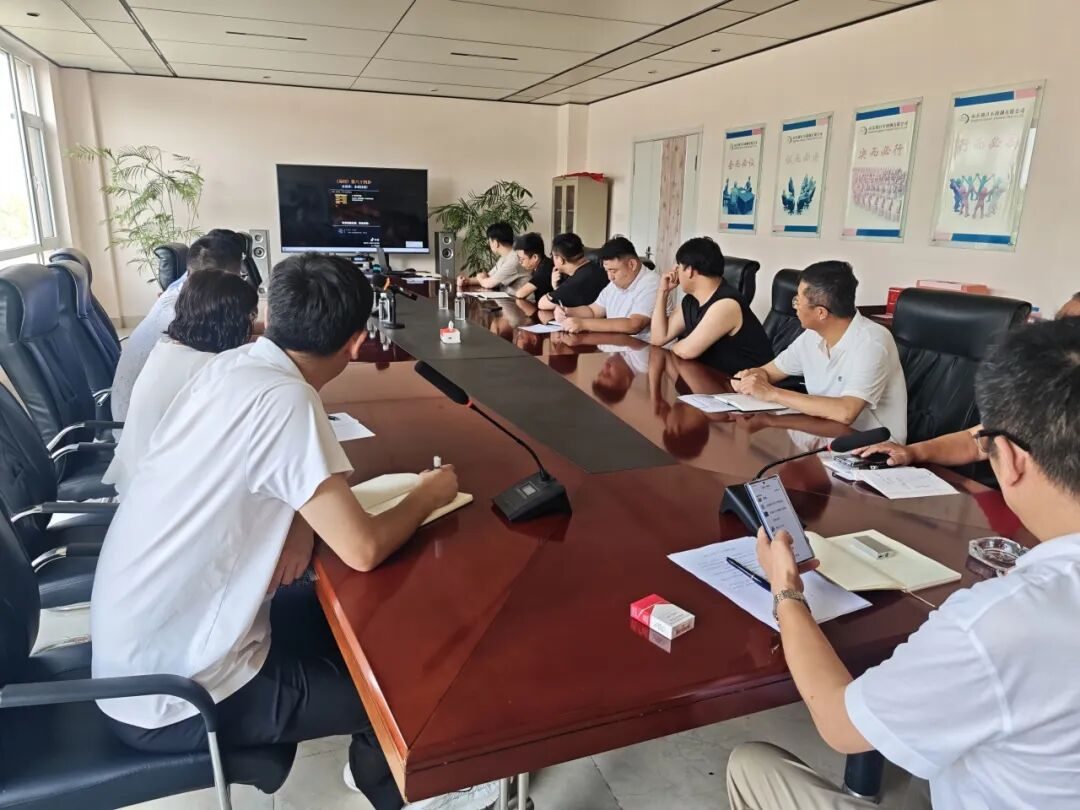
On the morning of July 11, 2026, Zhaori Stainless Steel held an internal work-problem review, chaired by Chairman Xiao Guodong himself. Opening with a study of Wei Ji, then analyzing operating risks through the Qian cycle, the meeting faced existing pain points in production, sales and team management, dug into root causes, set action standards and issued new management measures. Without resting on stage results and keeping a reverent, self-reflective mind, the company will keep rectifying and cooperating to lay the foundation for long-term development.
1. Opening on Wei Ji: No Eternal Perfection, Only Continuous Self-Reflection
Chairman Xiao used Wei Ji as the opening argument, setting the meeting's core tone of mindful of danger in peace and as careful at the end as at the start.
As the last hexagram of the I Ching, Wei Ji states the underlying logic of business: there is no once-and-for-all, permanently complete victory; every stage achievement is only one stop in the development cycle.
The Qian hexagram specifically reveals the pattern of decline after peak: the fifth line, “Flying Dragon in the Sky,” marks a stage high point; if one indulges in achievement and grows proud, the company then enters the top-line risk cycle of “Arrogant Dragon Has Remorse.”
Chairman Xiao pointed out that some colleagues, after short-term results, grow complacent, walk with heads held high and a restless mind, consider themselves the “fifth-rank sovereign,” shut out differing views, habitually shift blame, and fail to see lurking risks.
This confuses “stage success” with “permanent stability,” falling into the mindset that “completion is the finish line.”
The hexagram words, “the little fox crosses, wetting its tail,” are a warning to all: batches of defective goods, a million-yuan inventory backlog, broken cross-department communication and mishandled complaints all stem from letting down guard halfway through. Chairman Xiao made clear that every employee must grasp two layers of I Ching reasoning:
1. Face the normal state of “not yet complete”: sales, production and management always leave room to improve; there is no perfect process, only continuous iteration.
2. Keep a mindful, cautious heart: using the Qian rise-and-fall cycle, do not loosen standards over stable orders, customer recognition or short-term results; predict risks ahead and guard against numbness and slackness.
Chairman Xiao stressed again: a moment of “flying dragon in the sky” does not last; arrogance and blame-shifting are the company's greatest hidden danger. Only by breaking complacency, taking the initiative to self-check, denying and questioning oneself, and striving to change oneself can a thorough self-transformation be achieved, avoiding the “arrogant dragon remorse” trap of decline after peak.
2. Facing Pain Points: Three Core Problems and Their Root Causes
Drawing on Wei Ji's careful distinction of things and their proper places, Chairman Xiao led a deep review by all, avoiding no shortcoming, and sorted out the team's outstanding issues across mindset, execution and cross-team collaboration.
(1) Mindset Bias: Complacency and Blame-Shifting, Vague Capability Boundaries
Deep-rooted complacency: some employees stop improving after small gains, consider themselves at the “flying dragon” level, refuse to learn or innovate, reject differing views and miss hidden risks.
Habitual blame-shifting: when problems arise, the first move is to attribute them outward, without looking for root causes in one's own part, lacking inward self-reflection.
Blind spots in professional skill: sales staff do not know product parameters, production staff do not understand anomaly logic; most act only as information relays, unable to reconstruct facts or solve real customer needs.
(2) Execution Gap: Concealment and Delay, Weak Responsibility Awareness
Late reporting of production anomalies: equipment and die faults were privately adjusted and concealed; of this batch of 436 products, 191 had surface defects and could not ship; a prior 500-piece order with the same issue caused over a thousand yuan in rework cost.
Perfunctory rectification of legacy issues: those responsible for the million-yuan two-year backlog have not learned the lesson, still using old working methods and making do instead of fully fixing things.
Lack of detail backup: vehicle scheduling, customer reception and site service have frequent small slips; they seem not to affect core business but steadily erode the company's external image.
(3) Poor Cross-Team Collaboration: Information Silos and Distorted Relay
Sales and production have no fixed communication mechanism and are informationally isolated: customer feedback goes to the workshop without on-site verification; process changes are not synced to sales; misjudgments of product quality by customers have occurred repeatedly, adding communication and travel cost. Teams work separately with little cooperation, failing to build combined strength.
Chairman Xiao also explained root-cause judgment through two return cases: customer-reported problems cannot be labeled product defects directly; on-site verification is required. Both return disputes were caused by improper setup of the customer's tube bender; our products fully met standard, showing that front-line research and on-site verification are indispensable.
3. Clarifying Management Logic: Three Core Principles for How Everyone Works
Combining Wei Ji's long-term self-reflection with the Qian rise-and-fall cycle, Chairman Xiao laid out three core management principles to guide all employees.
1. Crisis-Cycle Management: Guard Against Complacency with Reverence
The Qian cycle shows clearly that “flying dragon in the sky” is only a brief high point, followed by “arrogant dragon remorse”; any stage success is one link in the cycle, with no permanent advantage. Everyone should drop a sense of superiority, proactively predict potential production, customer and collaboration risks, and move risk control ahead to avoid passive remedy.
2. Root-Cause Judgment: All Truth Lies on Site
“Sitting in the office everything looks like a problem; step outside and they all become ways to solve it.” Complaints and production faults cannot be judged from afar; one must go down to the workshop and visit the customer site to verify. Away from the front line only the surface is visible; rooted on site, the root fix is found.
3. Capability Growth: Two-Way Learning to Break Professional Barriers
Sales staff should root in the workshop and master the product; production staff should follow the site and understand customer usage scenarios. Reject office-based speculation; exchange across the two sides to fill professional gaps.
4. Major Decisions: Role Upgrade and Mechanism Reform, Setting Action Standards for All
Against the shortcomings exposed in the review, the meeting issued several firm management decisions, clearly defining role standards, workflows and collaboration mechanisms.
(1) Full Role Repositioning: Sales Staff Renamed “Business Engineer”
Background for rectification: former sales staff worked mainly through personal relations and information relay, with only a vague grasp of customer operations, product advantages and usage scenarios, unable to solve needs precisely and even causing major customer losses.
Hard requirements for the new role
Master three core capabilities: understand the customer's operating status, grasp the company's core product advantages, and know the customer's end-use needs.
Regularly go to the front line: enter the workshop to learn production processes and proactively visit customers, dropping the old office-waiting model.
Abandon low-end working thinking: pure message relay and relationship maintenance will be phased out; customers are served through professional technical support.
(2) Standardize the Full Anomaly Process and Tighten Reporting and Accountability
After production faults, customer complaints or other anomalies occur, preserve video and original documents and report fully at once; private adjustment, concealment and delay are strictly prohibited.
Reporting only after problems worsen is prohibited; concealed hazards out of fear of blame or trouble will be heavily penalized once verified.
(3) Establish a Regular Collaboration and Communication Mechanism
Sales and production hold fixed weekly exchange meetings to break information silos and sync process changes, customer needs and production anomalies.
Two key tasks are followed up specially: dedicated tracing of the root cause of batch nonconforming products, and coordination with die makers to rectify and accept defective dies and recover costs.
(4) Unify Everyone's Mindset and Learning Standards
Remember: “mindset guides action; change the view and the world opens up.” Fully break the passive “wait, rely, demand” mindset; proactively backfill and seek problems; reject the lying-flat thought of “I won't move unless others do.”
(5) Refine Standards for Logistics and Service Staff
High standards are set for drivers and reception staff on detail slips: park properly on site and receive customers proactively and thoughtfully; small details show overall company quality and guard brand reputation.
5. Meeting Quotes, Shared by Chairman Xiao and All Colleagues
1. Sitting in the office everything looks like a problem; step outside and they all become ways to solve it.
2. Mindset guides action; change the view and the world opens up.
3. New-era sales people should be professional business engineers.
4. Know the difficulty and it is not hard; know stubbornness and do not be stubborn; admit the fault and correct it; know what you know and acknowledge what you do not—that is true wisdom.
Closing
The way of Wei Ji is self-reflection that never stops;
the warning of Qian is the reminder that peak must decline;
the foundation of manufacturing is the pursuit of excellence.
This review opened with Wei Ji to align minds, then used the Qian cycle to warn everyone. It is not a blame session but a new starting point for Zhaori's self-renewal and iteration.
Going forward, all colleagues will use Wei Ji's humility to stay alert, keep reverence through the Qian rise-and-fall pattern, solve problems with on-site thinking, break silos with collaboration, and reshape role value with professional standards.
Not trapped by past results, not avoiding current shortcomings, rectifying one step at a time and improving one matter at a time, united in strength, we walk steadily on every step of the company's long-term development.