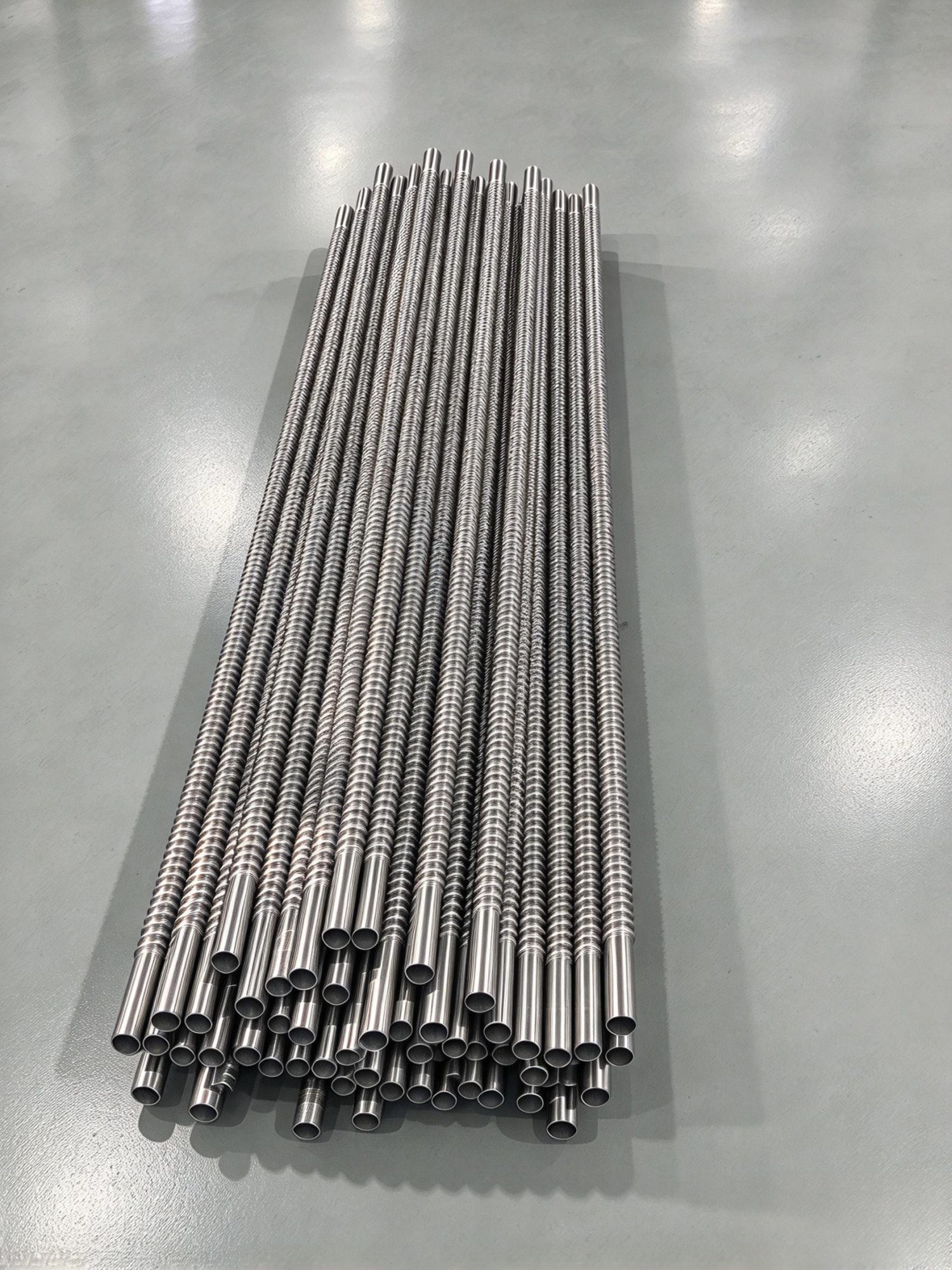
Threads are rolled onto the base tube to disturb the flow and enlarge the heat-transfer area for enhanced heat transfer; used for heat-exchange elements, condensation/evaporation and corrosion-resistant service.
| Base tube OD | φ8–32mm (reference) | Wall thickness | 0.4–2mm (reference) |
| Available materials | 304, 304L, 316L, 321, 2205 | Length | Custom |
| Forming parameters | Thread pitch and profile per drawing | Surface finish | Pickled (optional) |
| Inspection | Eddy current test, underwater air-tightness test (as required) | Type | Rigid threaded tube |
| Typical applications | Heat-exchange equipment, condensation/evaporation elements, corrosion-resistant service | ||
Q: What is the difference between a threaded tube and a smooth tube?
A: The threaded ribbing disturbs the shell-side flow, breaks the boundary layer and enlarges the heat-transfer area, giving stronger heat transfer than a smooth tube. Smooth tubes suit clean, steady-load service; threaded tubes suit high-heat-demand exchangers and condensers.
Q: Can thread parameters be customized per drawing?
A: Yes. Thread pitch, profile and length are customized to the heat-exchanger core drawing; straight threaded tubes can be secondarily bent into U-bends or serpentine banks on request.
Q: Which material suits corrosive service?
A: Common heat-exchange use: 304, 304L, 321, 316L; chloride or acid-alkali corrosion service: 2205 duplex, selected by medium and temperature.
CONTACT US