Amid intensifying industry competition and tightening margins, Shandong Zhaori Stainless Steel has maintained a strong order backlog and steady growth in new customers. Under General Manager Xiao's overall planning and hands-on guidance, the company convened a dedicated improvement workshop for the Young Vanguard Program task force—aimed at strengthening our production technology foundation, breaking down cross-functional silos, and empowering young talent to drive innovation.
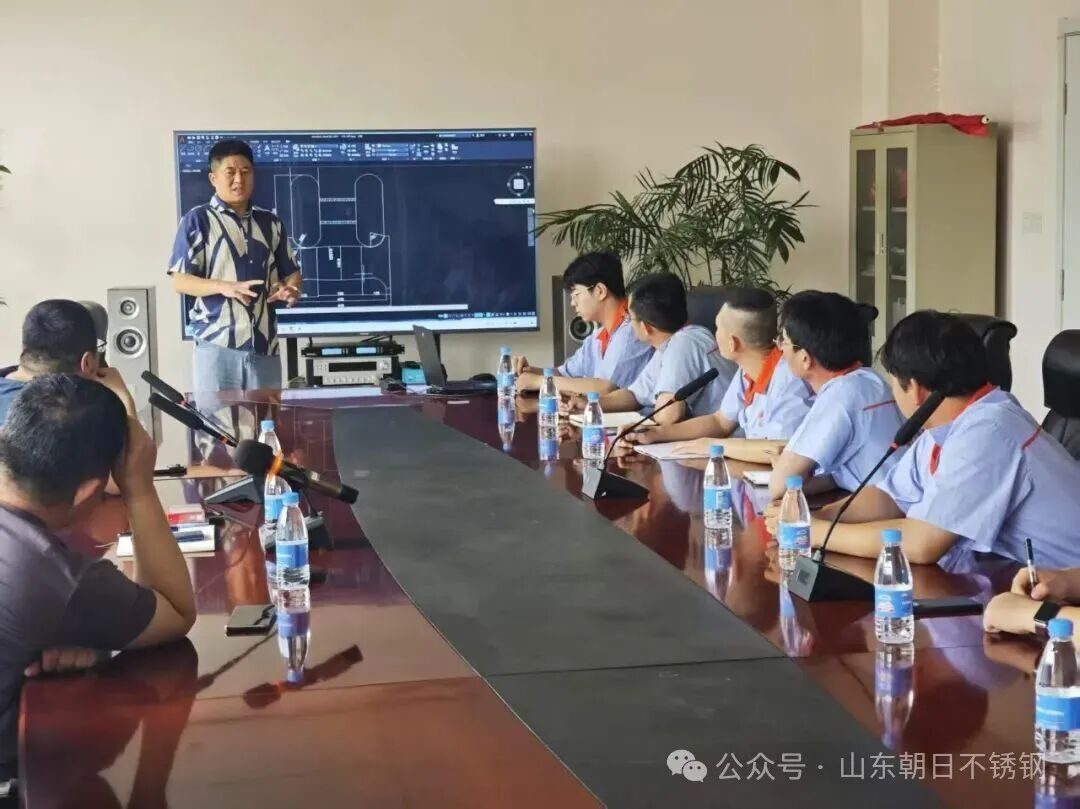
Key specialists from engineering, production, sales, and management gathered directly on the shop floor. Grounded in real production scenarios, the team reviewed hands-on results, extracted lessons from past projects, and aligned on a clear lean-improvement roadmap—using fresh thinking to drive process upgrades and build lasting manufacturing competitiveness.
Part 1. Shop-Floor Review: Upgrading Process Capabilities by Solving Real Bottlenecks
The workshop focused on an in-depth review of recent production-line commissioning, tooling and die upgrades, and process innovations. Led on site by General Manager Xiao, Young Vanguard members drew from real commissioning experience, challenged conventional assumptions, and targeted recurring technical bottlenecks. Through repeated trials, benchmarking, and validation, the team delivered tangible improvements in quality, efficiency, cost reduction, and risk control—elevating our production processes, hands-on execution, and engineering expertise across the board.
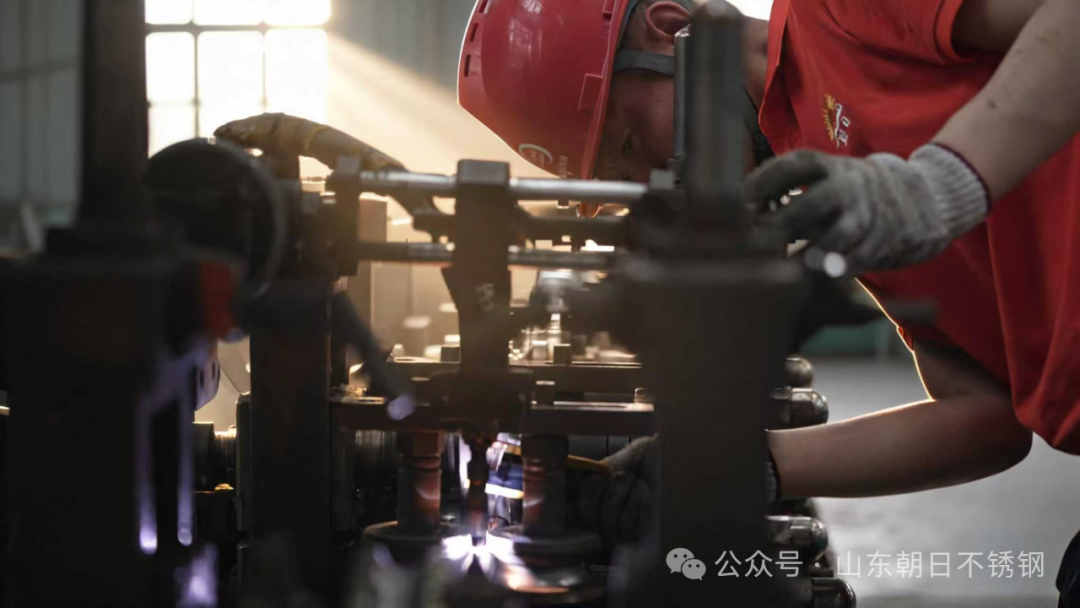
(1) Challenging Conventional Thinking to Solve Special-Profile Tube Forming Defects
Addressing common industry challenges—such as unstable forming of special-profile tubes, surface die marks, and tight dimensional tolerances—the team moved beyond the conventional assumption that defects can only be fixed by lengthening the die body. With General Manager Xiao's on-site technical guidance and multiple rounds of shop-floor trials and parameter tuning, the team implemented an integrated process upgrade combining main-die leveling and alignment, die-cavity geometry refinement, and precision clamping-pressure and positioning control.
This solution eliminates the need for large-scale replacement of main clamping dies. By resolving forming pain points at the level of forming mechanics and tooling alignment, it significantly improves both surface finish and dimensional accuracy. It also reduces retooling costs across multiple tube sizes, cuts material scrap, shortens line changeover and setup times, and increases first-pass yield—providing a proven, production-ready process for high-precision, standardized mass production of special-profile tubes while driving simultaneous gains in quality, cost, and efficiency.
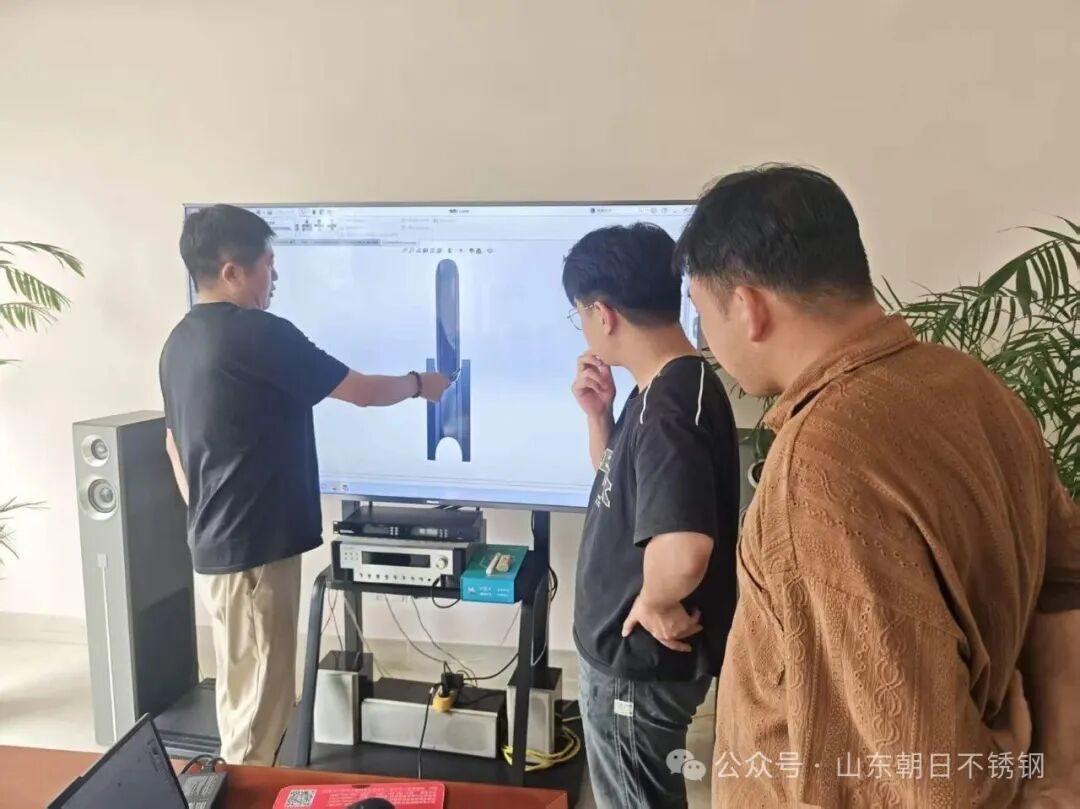
(2) Mastering Core Machine Mechanics: Moving from Experience-Based Operation to Precision Control Addressing long-standing experience-based misconceptions with the CNC tube bender feed carriage, the team overturned the assumption that carriage clamp-following only works in automatic mode. Following General Manager Xiao's mandate to master underlying machine mechanics rather than rely on habit, the team broke down core machine parameters and ran step-by-step on-machine trials—successfully establishing stable dual-mode (manual and automatic) operation for carriage clamp-following.
Team members studied the mechanics behind bend-angle compensation, auxiliary booster push speed, and synchronization ratio, moving away from guesswork to master fine-tuned machine adjustment. Setup accuracy and operating efficiency improved noticeably, unlocking full equipment capacity and shifting shop-floor production from traditional trial-and-error operation to mechanism-driven precision manufacturing.
(3) Establishing End-to-End Tooling Risk Control for Upstream Quality Management Drawing on full-process experience from design to commissioning across multiple new dies and tooling sets, the team established standardized design guidelines and a complete risk-control framework covering pre-production prevention, in-process control, and post-run review.
During tooling and die design, key factors—including tube clamping stability, cavity dimensional accuracy, and press-force matching—are coordinated upfront to prevent forming deviations, fit defects, and out-of-tolerance dimensions. For critical details such as weld-seam integrity, chamfer concentricity, and cut-to-length accuracy, full traceability check standards now cover machine bearings, fixture datums, and measuring components. This shifts quality management upstream from reactive rework to proactive source-level prevention, cutting process defects right from the design and validation stages.
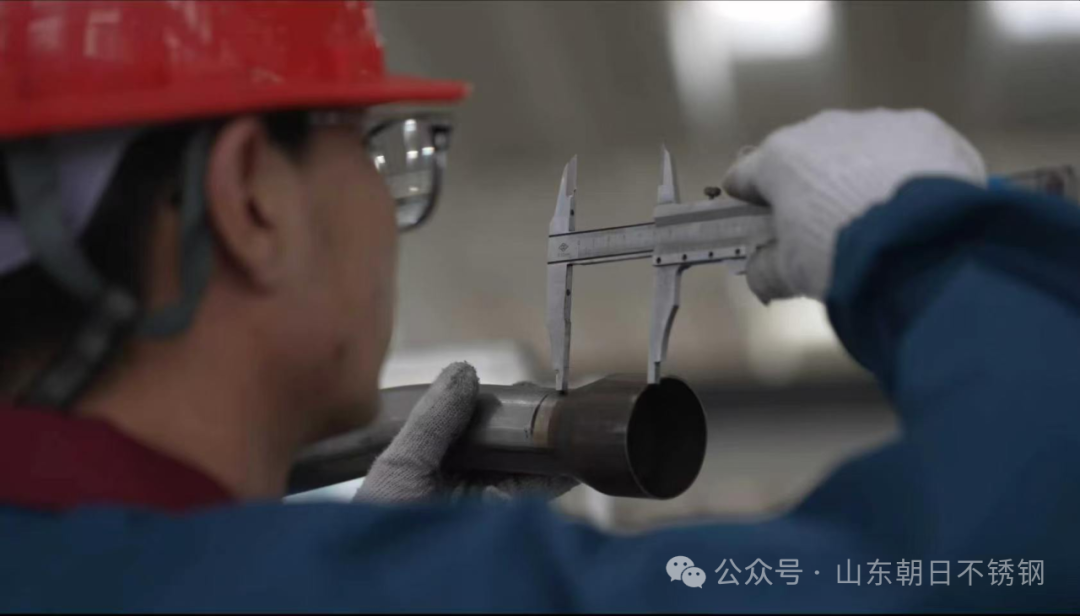
Through repeated shop-floor trials and open technical discussions, the Young Vanguard team proactively stepped out of its comfort zone. By confronting blind spots in past setups and validating processes against real on-site results, the team continued unlocking optimization potential across both equipment and tooling—strengthening the production foundation behind product quality.
Part 2. Building Shared Alignment: Fresh Thinking Drives Lean Execution
During the workshop, General Manager Xiao connected broader industry trends with company operations, emphasizing how fresh thinking and continuous improvement drive operational upgrades. Addressing strong order demand alongside rising delivery pressure, he set a pragmatic direction for the next phase—urging the team to translate new insights into concrete daily execution.
(1) Seizing Market Opportunities by Protecting Quality and On-Time Delivery External competition remains intense, with margins under continuous pressure. Shandong Zhaori maintains a strong market position through consistent product quality, solid brand reputation, and reliable customer service—backed by a full order book and steady growth in new clients. General Manager Xiao emphasized that quality and reliable delivery are the foundation of our market confidence. As the margin for error in manufacturing continues to shrink, product quality directly determines order profitability; every team member must uphold strict quality standards, commit to precision craftsmanship, and ensure efficient, high-quality delivery to maximize the value of every order.
(2) Rebuilding Systems Thinking for Disciplined, Coordinated Operations The workshop called on all staff to move away from rough, habit-driven work and adopt a disciplined approach built on root-cause analysis, systematic coordination, and precision control. Following General Manager Xiao's systems-thinking framework, technical and production teams are expected to plan ahead, investigate root causes, and apply targeted fixes rather than temporary workarounds. Engineers and operators are encouraged to study equipment linkage principles, tooling design logic, and underlying parameter mechanics—reducing waste and unlocking lean efficiency through standardized work. When equipment anomalies occur, teams must look beyond surface symptoms and trace root causes across drives, fixtures, bearings, and related components.
(3) Strengthening End-to-End Accountability Across Every Role The meeting further clarified role boundaries and collaboration standards, establishing a core operating rule: do your own job right, and never pass problems downstream to the next process. Under General Manager Xiao's end-to-end accountability framework, every role must take full ownership—reporting and troubleshooting machine or tooling anomalies immediately, and starting production only when equipment condition and process parameters meet specifications. Quality control will strengthen upfront risk screening, while management enforces disciplined on-site execution—creating a complete cycle of accurate prevention, timely response, and continuous review.
(4) Mutual Growth: Building a Bold, Thinking, Execution-Driven Young Team The company remains committed to shared growth between talent and the business. Following General Manager Xiao's guidance on developing young talent, rising specialists are encouraged to strengthen cross-functional coordination, root-cause problem solving, and customer communication alongside technical craft. The team is encouraged to confront knowledge gaps honestly, challenge outdated assumptions, look inward first when solving problems, and foster a pragmatic, supportive culture where young talent unites to overcome tough challenges.
Part 3. Locking In Quality Goals: Turning Workshop Outcomes into Long-Term Operating Standards Building on the practical lessons from this workshop, the team anchored four core objectives—quality, efficiency, cost, and on-time delivery. Centered on standardization, process optimization, capability building, and end-to-end collaboration, we established a set of permanent operating mechanisms that turn General Manager Xiao's guidance and shop-floor breakthroughs into formal workflows—driving continuous improvement in both team capability and production quality.
(1) Standardized Pre-Run Inspection for Equipment and Tooling Unified operating procedures now cover tube size changeovers, new-machine startups, and tooling replacements, supported by a dedicated pre-run inspection checklist. Before any machine goes into production, core precision components are inspected and calibrated one by one to standardize production datums—stabilizing tube dimensional accuracy and surface finish at the source while minimizing unexpected mid-run issues.
(2) Cross-Functional Tooling Review Mechanism A cross-departmental review system has been established for all new-product tooling and dies. Before launch, engineering and production specialists jointly review each design—verifying structural parameters, assembly clearances, and press-force matching to catch potential machining, assembly, or forming risks early, reducing tooling rework and shortening new-product launch cycles.
(3) Hands-On Machine Parameter Training Regular shop-floor drills now use scrap tubing first for setup trials so operators can observe how different parameter combinations affect machine behavior. Targeted training focuses on bend-angle compensation logic and synchronization parameters, backed by a standardized equipment setup manual that unifies operating practices and cuts trial-and-error setup waste.
(4) Long-Term Process Improvement Archive Practical cases covering process upgrades, equipment retrofits, and tooling optimizations are systematically documented—recording problem-solving logic, setup adjustments, and verified results. Regular team reviews distill repeatable best practices into a shared knowledge base, preventing recurring issues and driving continuous process improvement.
(5) Integrated End-to-End Collaboration An efficient cross-functional workflow now links sales, production, quality control, and warehousing: sales communicates complete customer specifications, production enforces end-to-end process standards, QC executes thorough risk screening, and warehousing standardizes finished-tube protection and handling—eliminating information silos and elevating delivery speed and customer service.
Closing Driven by craftsmanship and pragmatic execution, this workshop—guided on site by General Manager Xiao—was far more than a routine meeting; it was a hands-on exercise in sharpening thinking and locking in best practices. From challenging old assumptions to solving process bottlenecks and building standardized systems, the Young Vanguard team turned shop-floor insights into repeatable, production-ready methods.
In a rapidly shifting industry, Shandong Zhaori Stainless Steel remains focused on strengthening internal capabilities through practical review. Rising talent continues to grow through real-world execution, while our processes advance through every technical breakthrough. That grounded, results-driven spirit fuels our long-term confidence—repaying customer trust with consistent quality and reliable delivery as we advance along a path of specialized, high-quality manufacturing.

Quality First · Delivery Guaranteed Professional R&D and Manufacturing of Stainless Steel Tubes
Hotline: 0536-3356888 13780862860
Address: No. 7799 Longshang Road, Longshan High-Tech Industrial Park, Linqu, Shandong