
For buyers and engineers working on environmental protection, chemical, and waste-heat recovery projects—if you are sourcing butt-weld-free, one-piece formed serpentine heat exchanger tubes and tube bundles, save this guide for reference.
01 With serpentine heat exchanger tubes, the problem is rarely just one weld The last thing you want is a leak discovered only after the tube bundle is installed and the equipment is running. The weld seam is just one risk point; the manufacturing issues that most often trouble buyers and engineers include: ✔ Welded joint itself: Butt welds between straight sections are an inherent weak point; under condensate corrosion and pressure cycling, they fail first. ✔ Bend thinning: Excessive wall thinning and out-of-roundness on the outer bend reduce both pressure rating and effective heat-transfer area. ✔ Cracking and wrinkling: Improper bending parameters lead to wrinkling, cracking, or orange-peeling on the inner wall, creating severe stress-concentration points. ✔ HAZ sensitization: Without proper post-weld solution annealing, intergranular corrosion initiates and spreads from the heat-affected zone. ✔ Internal weld protrusion and misalignment: Fit-up misalignment, incomplete root penetration, and internal weld protrusions cause rapid erosion and perforation once media flows through. ✔ Single-tube pressure testing only: Skipping a full-bundle hydrostatic test after assembly leaves hidden defects to surface on-site during commissioning. ✔ Material mix-ups and poor passivation: Mixed grades, lack of traceable mill test certificates (MTC), and inadequate pickling and passivation leave residual free iron that triggers pitting corrosion.
Our serpentine heat exchanger tubes are continuously CNC-bent from a single-length mother tube—formed in one piece with zero butt welds, eliminating butt-weld leakage risks at the source. Bending parameters, full-bundle pressure testing, material traceability, and pickling and passivation are all controlled end-to-end in our own workshop.
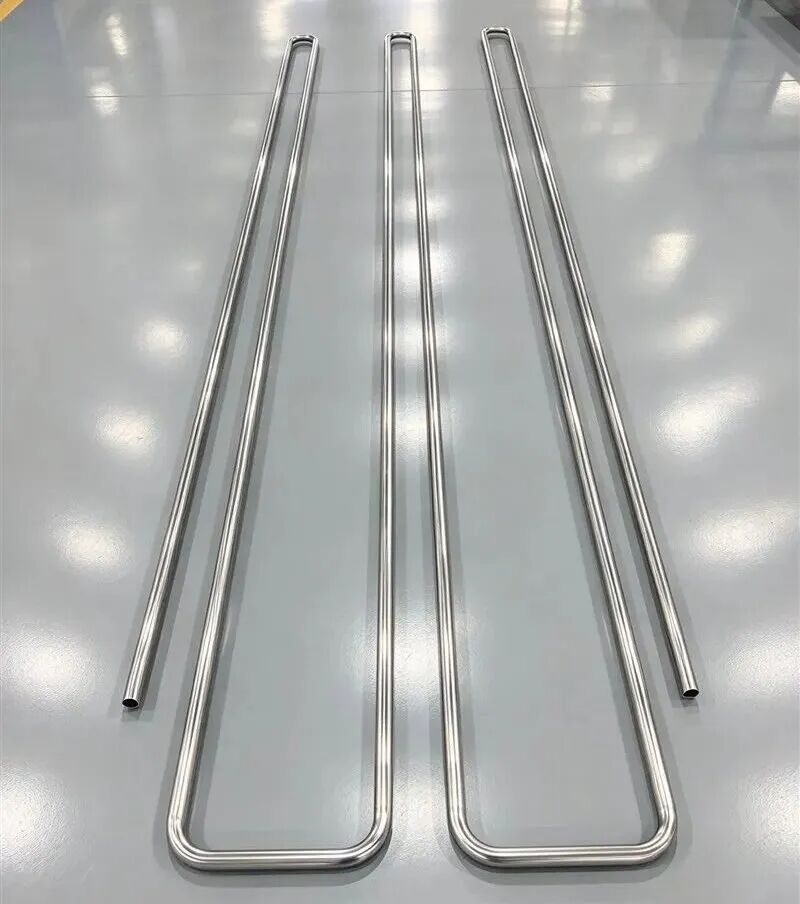
One continuous tube bent into a complete serpentine tube bundle CNC continuous bending produces smooth, true-radius bends with uniform wall thickness—free from galling, wrinkling, or cracking—preserving the full mechanical strength and corrosion resistance of the base alloy. Each complete serpentine tube bundle is continuously formed from long-length tubing, strictly following every technical specification on the customer's drawing throughout production with zero compromise on quality control.
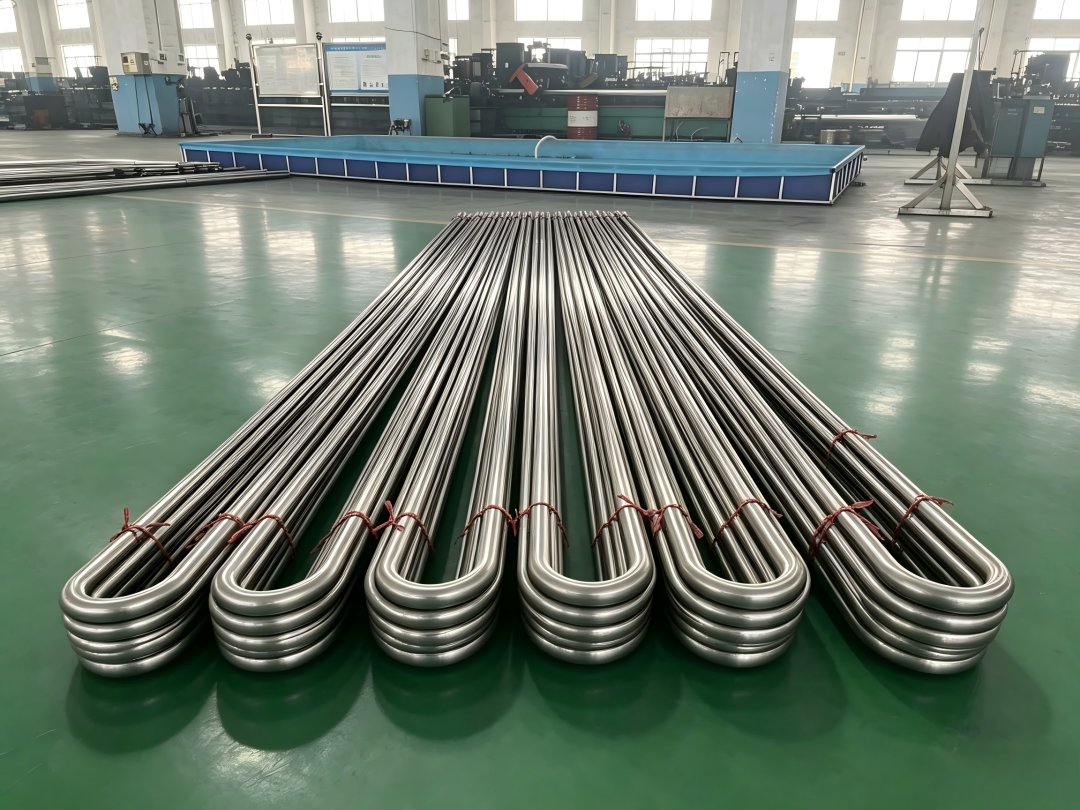
Every requirement on the drawing, we deliver Taking this serpentine heat exchanger tube drawing as an example: ✔ Tube: Welded stainless steel heat-exchanger tube, per GB/T 21832.2-2018 ✔ Forming: Continuous bending from a single tube, one-piece formed, zero butt welds ✔ Bending: Fixed R60 bend radius, free from cracking or wrinkling after bending ✔ Pressure test: Full-bundle hydrostatic test after forming, pressure-held to specification with test report issued ✔ Traceability: Each batch supplied with a Mill Test Certificate (MTC), batch-verified with 100% inspection ✔ Corrosion protection: Pickling and passivation after completion, with passivation quality verified per GB/T 25150
Customization scope ✔ Main products: One-piece formed serpentine heat exchanger tubes, serpentine heat exchanger coils, and complete serpentine tube bundles ✔ Available materials: Austenitic (304, 316L, 321) and Duplex / Super Duplex (2205, 2507) welded stainless steel heat-exchanger tubes ✔ Supporting processes: CNC continuous tube bending, hydrostatic testing, eddy-current inspection, online solution annealing, and pickling and passivation ✔ Application conditions: Industrial waste-heat recovery, flue-gas heat exchange and reheating, chemical media cooling, EV liquid cooling, and environmental desulfurization equipment ✔ Delivery assurance: Manufactured strictly to customer drawings; MTC, hydrostatic test reports, and NDT inspection reports supplied upon request
For the very same serpentine tube drawing, the manufacturing route makes a huge difference. Products with butt welds carry a long-term hidden hazard; every weld seam eliminated by our continuous-bending, one-piece forming process removes a potential leak point—making the tubes far better suited to demanding corrosive and high-pressure service.
If you want to eliminate weld-seam leakage and source one-piece formed serpentine heat exchanger tubes, please share your drawings along with process media, pressure, and temperature parameters. Our team will align with you on the technical solution and support sample testing. Buyers and engineers are welcome to reach out for inquiries and quotations.